Join Nang Lucky Gogoi in empowering our community today as we advocate for women's rights and make a difference together.
4th Cooperative Mela in Assam 2025
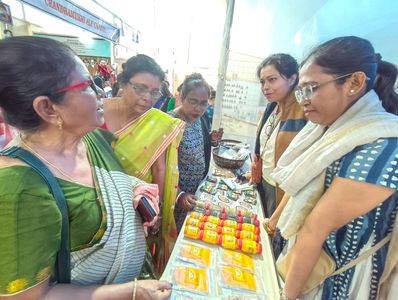
From Welfare to Ownership: How Assam’s Cooperative Model Is Redefining Women’s Economic Role
By Nang Lucky Gogoi,
Director, Mahabahu Agro Farmers Cooperative Society Ltd.
The recently concluded Fourth Cooperative Mela, held from 13 to 15 December 2025 in Guwahati, offered a clear and confident picture of how Assam is shaping a women-centric development model that is both compassionate and economically empowering. Organised during the International Year of Cooperatives 2025, the mela reflected a mature cooperative ecosystem where policy support, institutional strength and women’s enterprise are moving forward together.
As a researcher in women empowerment and a Director of Mahabahu Agro Farmers Cooperative Society Ltd, an all-women led state-level cooperative society that participated in the mela, I witnessed this convergence at close range. The event was not merely an exhibition of products; it was a demonstration of how women in Assam are increasingly occupying central roles as producers, directors and decision-makers within the cooperative economy.
Nearly 200 cooperative societies from across the State participated in the three-day mela, representing sectors such as agriculture, food processing, spices, dairy, fisheries, handloom, handicrafts and women and youth-led enterprises. Based on internal assessments shared among participating societies, collective on-site sales during the mela exceeded ₹70 lakh. This outcome is significant not only for the revenue generated, but for what it represents: growing consumer confidence in cooperative products and the readiness of grassroots institutions to engage with markets at scale.
This progress has been enabled by a broader policy environment that recognises women’s needs at different stages of life and participation. Under the leadership of Chief Minister Dr Himanta Biswa Sarma, Assam has pursued a holistic approach to women’s empowerment. Schemes such as Nijut Moina, which supports girls in continuing their education without financial stress, Mukhyamantri Mahila Udyamita Abhiyan, which encourages women to take up entrepreneurship, and Orunodoi, which seeks to reduce poverty while preserving women’s dignity, have created a strong foundation of social security and confidence.
What becomes evident at platforms like the Cooperative Mela is how this foundation translates into economic agency. Women who are supported through education, livelihood security and entrepreneurial schemes are increasingly stepping into leadership roles within cooperatives. At the mela, women-led societies negotiated prices, assessed market feedback, explored partnerships and discussed expansion strategies. These are not symbolic roles; they are core economic functions that define ownership and control.
Assam’s cooperative sector today reflects this transition. The State has over 12,000 registered cooperative societies, with more than 7,700 functional cooperatives actively contributing to local economies. Particularly notable is the presence of over 2,200 women multipurpose cooperative societies, indicating that collective enterprise has become a preferred and effective pathway for women’s economic participation. The strong visibility and performance of women-led cooperatives at the mela underscored this structural shift.
This State-level progress is further strengthened by national policy direction. Under the leadership of Prime Minister Shri Narendra Modi, the cooperative sector has received renewed institutional focus through the creation of the Ministry of Cooperation and the guiding vision of “Sahkar se Samriddhi”. This national emphasis has encouraged states to modernise cooperative governance, improve transparency and integrate cooperatives into wider markets. Assam’s experience shows how such a vision can yield tangible results when implemented with consistency and intent.
From a women empowerment perspective, the significance of the Fourth Cooperative Mela lies in its affirmation that welfare and enterprise are not competing ideas. In Assam, they are complementary. Government support ensures stability and dignity, while cooperatives provide space for initiative, leadership and value creation. Women are not being pushed abruptly from support systems into markets; they are being enabled to move confidently from security to stewardship.
The ₹70 lakh-plus turnover achieved in just three days is therefore more than a statistic. It is an indicator of an ecosystem where women-led cooperatives are increasingly capable of responding to demand, sustaining quality and aspiring for growth. It reflects an economy where women are not only protected, but trusted and empowered to lead.
The Fourth Cooperative Mela thus stands as a meaningful marker of Assam’s development trajectory. With continued leadership from Chief Minister Dr Himanta Biswa Sarma, aligned with the national vision articulated by Prime Minister Shri Narendra Modi, the State’s cooperative movement appears well positioned to deepen inclusive growth and reinforce women’s economic leadership in the years ahead.